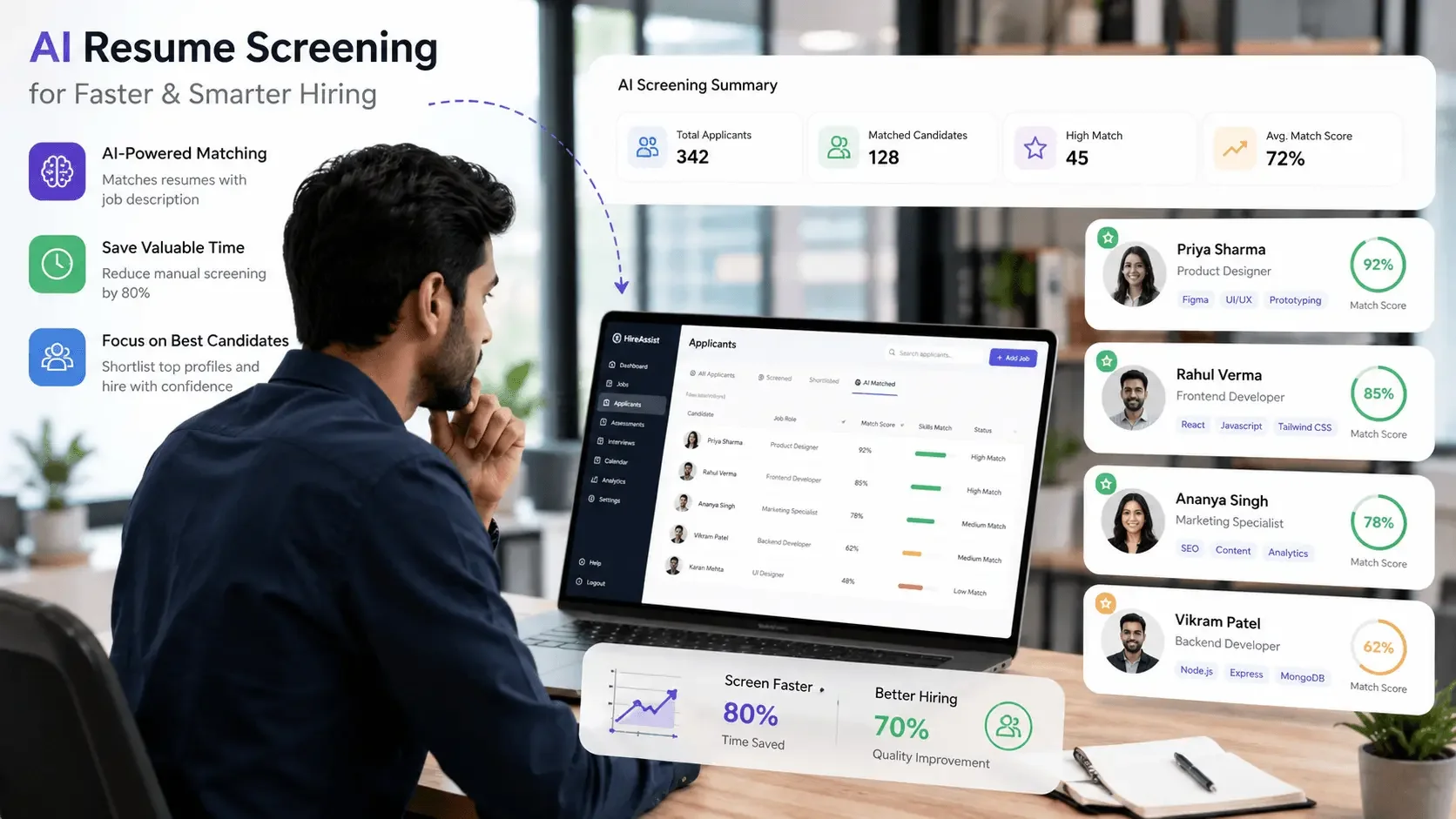
Speed is the easy sell. A founder I spoke with in Bengaluru had cut resume review from two days to twenty minutes and was proud of it. Then the team hired a senior engineer who interviewed like the loudest person on the panel. Three months later people were redoing his work. The shortlist was fast. The decision was a vibe.
The resume was not the part that failed. The room was.
What drifts when nobody shares a page
Put five candidates through a week of interviews with no shared standard and watch the bar move. Monday's candidate gets a hard question about a launch that failed. Friday's candidate gets a tour and a chat about colleges, because everyone is tired. Both get a "seemed strong" in Slack.
Nobody is being corrupt. Memory is just a bad instrument. The last person you liked occupies more space than the person you met on Tuesday and forgot to write down.
I have sat in debriefs that were really one person campaigning. They talked more, so their favourite survived. The quieter interviewer had a concern about how the candidate blamed a whole team, and never got to the second sentence. The hire was a volume contest.
Same job, same territories
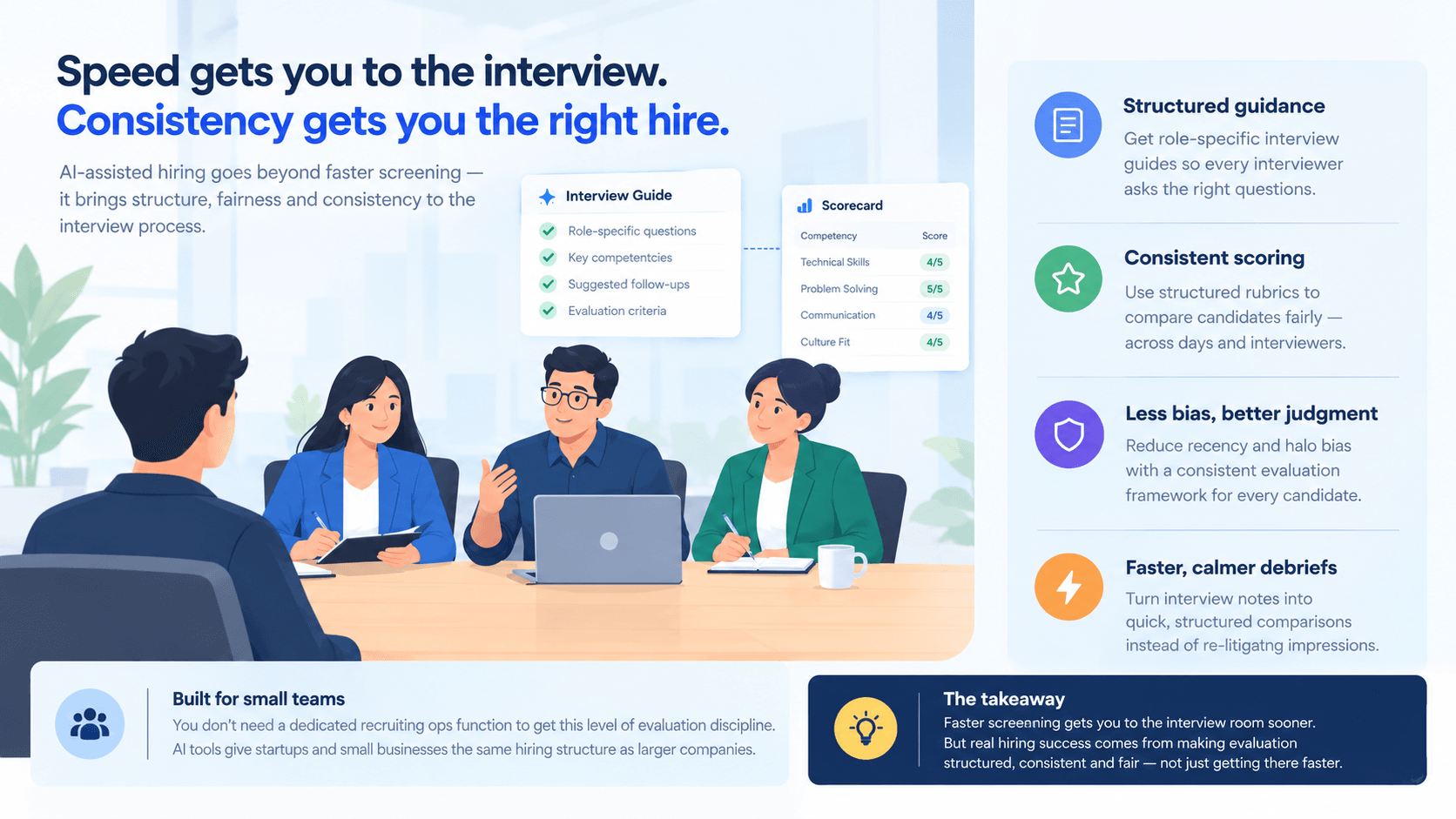
You do not need a twelve-row matrix to stop this. You need the four things this role will be judged on in six months, named before anyone walks in. And a note, written in plain language, for what a weak answer sounds like.
Same territories for every candidate. Not identical theatre, but not a different interview depending on who is free. A score you enter before you hear the other interviewer. After is too late. You will edit yourself to match the person who spoke first.
A tool can draft question prompts from the job post so you are not staring at a blank doc at 9pm. It can also line the notes up so the debrief is "she was shaky on the outage, he was specific" instead of "I just liked him." It cannot save you if your four things were fog. "Culture fit" as a criterion is how clones get a badge. Leave that fight for the scorecard you agree before the first call. This piece is about what happens when you skip the comparison and argue impressions instead.
Small teams feel it faster
You do not have a recruiting ops person maintaining rubrics. You have a founder, a lead, and a doc named Interview_v3_FINAL. That is fine. Someone still has to refuse a hire that is only a feeling.
The useful tool is the one that makes skipping the write-up annoying. The useless one ranks a human into a single number and calls it objectivity. A single number hides which interviewer ignored the hard part.
If you only speed up the top of the funnel, you arrive at a sloppy decision sooner. That is not a better process. It is a faster mistake. Fix the room where you actually choose.
The debrief that is not a campaign
Run the meeting off the page, not off whoever speaks first. Two questions are enough. Where did the scores disagree, and what did we actually hear? If the disagreement is "I liked their energy," that is not a disagreement you can hire on. Send people back to the notes.
I have watched a 15-minute debrief replace an hour of re-litigation, but only when the notes existed. Without notes, fifteen minutes is just a shorter argument. With notes, you can see that three of you heard the same gap and one of you talked past it.
Write the decision down in a sentence a new teammate could read in six months. "We hired her because she had shipped a migration under a deadline and could name what she would do differently." Not "great culture, strong communication." Those phrases are how you forget why you chose, and how you repeat the choice by accident.
Speed still matters, just not first
I am not against a faster shortlist. Good people do not wait while you perform thoroughness. The order is the point. Get to the conversation quickly, then refuse to decide on memory. If your process cannot tell Monday's candidate from Friday's on the same four things, you do not have a hiring process. You have a social hour with a job title at the end.