A friend running a 12-person studio in Jaipur posted an operations role on a Thursday. By Monday she had 186 emails with attachments named Resume_final_v2. She opened about forty, mostly the ones near the top of the inbox, and hired from that slice. Weeks later a colleague searched the unread pile for "warehouse" and found someone stronger. The hire was already in notice period.
That is small-team resume screening. Not a philosophy. An inbox.
Why the manual pass fails
It does not fail because you are careless. It fails because resume number 90 gets less of you than resume number 4. Layouts differ. One person buried a relevant year inside a paragraph about a college fest. You were on a client call. You skimmed. By evening you were choosing from the people who happened to format well and arrive early.
Meanwhile a good candidate has already taken another conversation. Nine days is a long time when you are unemployed and someone else replied on Friday.
Keyword search is the old version of "help," and it is clumsy. It promotes whoever pasted your job post into a skills section. A better first pass asks whether the experience matches the work, not whether the noun appears. Years in a similar mess. A tool they used for real, not a logo wall.
What you are trying to get
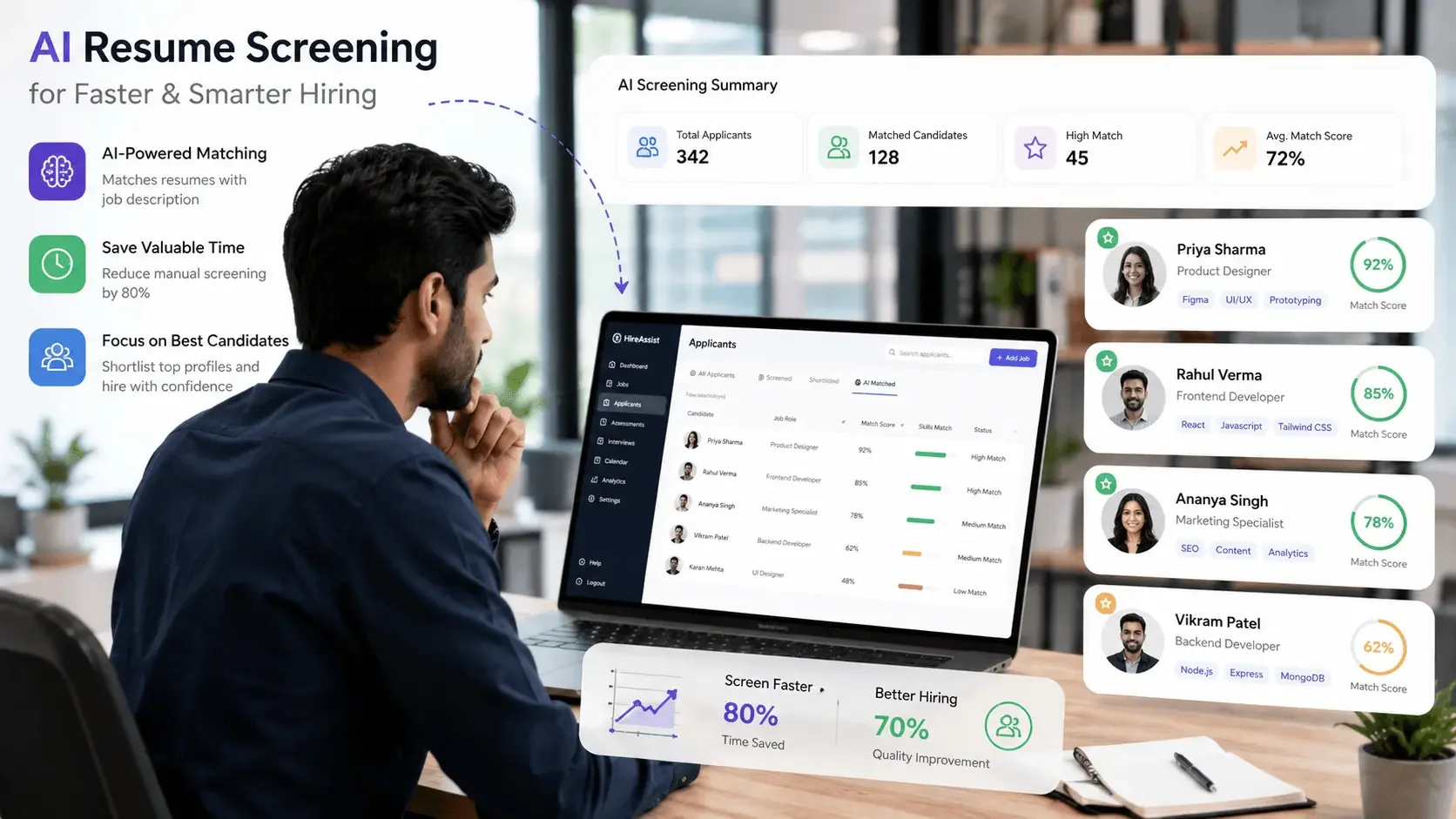
A pile you can actually read. Not 186. Fifteen or twenty, where the obvious mismatches are already out. They have not done the work. The city is impossible. The thing you named in the post is nowhere in the file.
Then you read. You. The shortlist is a reading list, not a decision.
Applications need one front door. Not your personal Gmail mixed with newsletters. Something should read each file against the post you actually wrote. If that post is three adjectives and "self-starter," the something will be as vague as you were. Write it like a person who has done the job. The tasks. The tools. The constraint. On-site twice a week. Hindi and English. Night closes during month-end.
You want a reason next to the name. "No inventory work" is useful. "72% match" is how you stop thinking.
The audit you should not skip
Open the top of the list, and open a random slice lower down. Models miss career-switchers who describe the work in different words. Ten minutes on the rejects will show you a confident blind spot before it becomes a hire.
Set the must-haves before the post goes live, and keep them few. Everything else is a conversation. Speed without that list is how you only meet people who look like the last person you liked.
HireAssist is built for this shape of team. One career page, resumes read against the role, then a person picks who to meet. Use that, or use a spreadsheet you actually maintain. Do not use hope and inbox order.
Screening will not know if someone is kind, or if they inflated a title, or if they will fight your accountant. It will stop you spending Thursday night on people who have never done the job. That is the win. Take it. Then interview like the decision matters, because the resume never made it.
A workflow you can run on a Tuesday
Applications land in one place by the end of the day they arrive. The first pass happens the next morning, not "when I get to it." You read the reasons, not just the order. You move a small set to "talk to" and you send the rest a short no. Silence is not a brand.
Before you book anyone, look at one reject that scored close and one that scored badly. If the close one is obviously relevant and the tool missed the wording, fix the job post or the must-have list. If the bad one is obviously wrong, trust the pass and stop rereading the whole pile to feel diligent.
Then talk to people while they are still interested. Same week if you can. The screening did its job when the conversation starts with their actual work, not with you discovering in minute ten that they have never done it.
What I would not automate
Do not let a score send the offer. Do not hide the reason from the person on your team who has to interview. Do not add twelve "nice to haves" because a template had space. Every extra rule is another way to drop the career-switcher who would have been fine.
The studio in Jaipur did not have a recruiting team. She had an evening and an inbox. That is most small companies. The fix is a door, a short list of must-haves, and a human who still reads. Faster is a side effect. The point is that the strongest file is no longer stuck under a newsletter.